Australia has launched an unprecedented global first by banning all children under the age of 16 from accessing social media, a sweeping measure that took effect nationwide just after midnight on Wednesday. The bold move marks one of the most forceful attempts yet by any government to wrest control from powerful tech giants and curb what officials describe as the harmful influence of âÂÂpredatory algorithmsâ on young people.
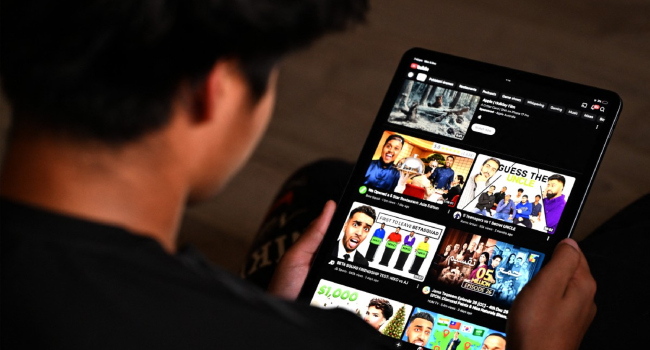
Under the new law, major platforms including Facebook, Instagram, YouTube, TikTok, Snapchat, Reddit, Threads, and X (formerly Twitter) are forbidden from hosting accounts belonging to anyone younger than 16 within Australia. Streaming services Twitch and Kick are also covered by the restrictions. Companies that fail to comply face fines of up to US$33 million.
Prime Minister Anthony Albanese, announcing the crackdown, declared that the country had reached a turning point in confronting the impact of technology on children. âÂÂEnough is enough,â he said. âÂÂThis is one of the biggest social and cultural shifts our nation has faced. We will take back control.âÂÂ
Across the country on Wednesday morning, hundreds of thousands of teenagers discovered they had been automatically locked out of the apps they once used daily. Ten-year-old Bianca Navarro expressed disappointment at being barred from her favourite content platform. âÂÂIt will be pretty sad because I have six years until I can watch it,â she said.
For many parents, however, the ban has come as a relief. Some families have long argued that social media companies are failing to protect young users from harmful content â from bullying to explicit material and violent imagery. Mia Bannister, whose teenage son Ollie died by suicide last year after enduring online bullying and being repeatedly served extreme dieting videos, said she welcomed the governmentâÂÂs action. âÂÂIâÂÂm sick of the social media giants shirking responsibility,â she said. âÂÂWe hand them a phone and hand them the greatest weapon we could hand them.âÂÂ
Research in recent years has increasingly pointed to a link between heavy social media use and declining mental health among adolescents, though experts caution that broader lifestyle factors also play a role. Still, many parents believe decisive intervention is overdue. Father-of-five Dany Elachi described the new rule as a necessary âÂÂline in the sand,â adding that society must âÂÂerr on the side of caution before putting anything addictive in the hands of children.âÂÂ
The ban has drawn global attention from both supporters and critics. Teenagers in other countries have followed the development closely, with reactions ranging from concern about restrictions on self-expression to acknowledgement of the rising levels of distraction and dependency among digital-native youth.
Social media companies, meanwhile, have sharply criticised the law, warning it may push young people toward more dangerous corners of the internet. Meta, the parent company of Facebook and Instagram, said the legislation was âÂÂpoorly developedâ and argued that children may simply migrate to unregulated spaces. X, owned by Elon Musk, told underage users the new restrictions were âÂÂnot our choice,â but a requirement under Australian law.
As some apps have agreed â reluctantly â to comply, alternative platforms such as Lemon8 and yope, which are not yet included in the ban, have surged in popularity. Legal challenges are expected, with reports suggesting Reddit may seek to overturn the ban in AustraliaâÂÂs High Court. An internet rights group has also launched efforts to reinstate teenage access, arguing the law is overly broad.
The government has acknowledged the system will not be flawless at the start, noting that resourceful teenagers may still find ways around the restrictions. Nevertheless, the threat of multi-million-dollar penalties is expected to keep pressure on companies to enforce age verification more strictly. Some platforms intend to use AI to estimate the ages of users from uploaded photos, while others may require young Australians to verify their age using government IDs.
Debate continues over which platforms should fall under the ban, with widely used services like Roblox, Pinterest, and WhatsApp currently exempt â though officials say the list remains under review. Until now, most major platforms have set a minimum age of 13, based largely on U.S. privacy laws. AustraliaâÂÂs sweeping move pushes that threshold higher, signalling a dramatic shift in how governments may regulate childrenâÂÂs access to the digital world.
As New Zealand, Malaysia, and other nations explore similar measures, the world is watching closely to see whether AustraliaâÂÂs unprecedented crackdown will mark the beginning of a new global approach to protecting children online.
News
Australia Imposes World-First Ban on Under-16s Using Social Media in Landmark Child-Safety Crackdown
Australia has launched an unprecedented global first by banning all children under the age of 16 from accessing social media, a sweeping measure that took effect nationwide just after midnight on Wednesday. The bold...