Founder and President of the Dangote Group, Aliko Dangote, has levelled serious corruption allegations against the Chief Executive Officer of the Nigerian Midstream and Downstream Petroleum Regulatory Authority (NMDPRA), Farouk Ahmed, accusing him of spending about $5 million on secondary school education for his children in Switzerland.
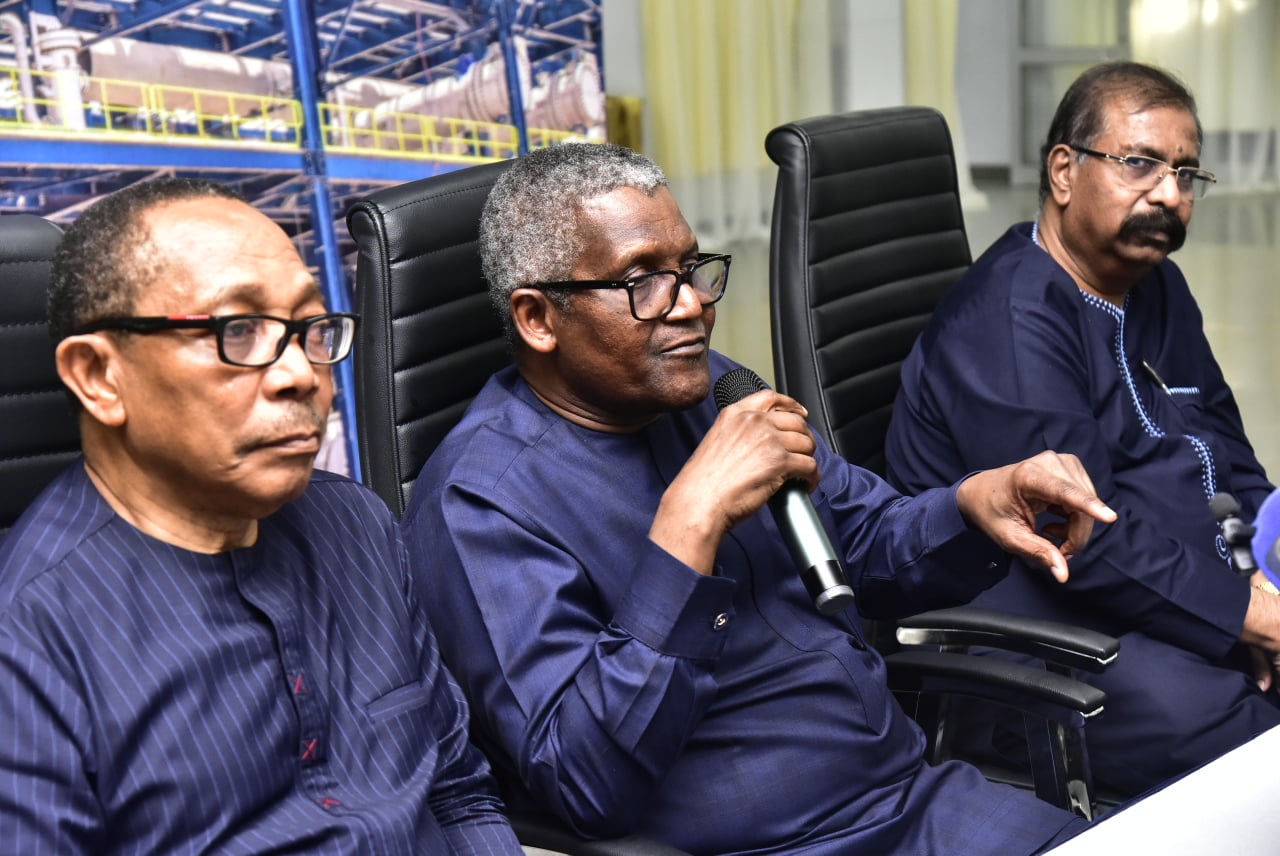
Dangote made the allegation on Sunday during a media briefing at the Dangote Petroleum Refinery and Fertiliser Plant in Lekki, Lagos. He described the alleged expenditure as incompatible with the earnings of a public servant and warned that it posed a grave threat to public confidence in regulatory institutions within the petroleum sector.
According to Dangote, the alleged sum was spent on six years of secondary education for AhmedâÂÂs four children. He argued that such an amount could not be reasonably justified by income derived solely from public service, raising questions about transparency and accountability.
He said complaints had reached him concerning the conduct of a regulator whose children were educated abroad at enormous cost, stressing that the alleged $5 million expenditure on secondary education alone was troubling. Dangote contrasted this with his own personal experience, noting that his children attended secondary school in Nigeria rather than overseas institutions.
The billionaire businessman emphasized that Nigerian taxpayers deserve to know how public funds are managed, questioning how a senior government official could afford such lavish educational expenses if public resources were being properly accounted for. He stated that as a taxpayer, he expected his contributions to be used for national development rather than diverted through corrupt practices.
Dangote further alleged that the spending raised serious concerns about income declaration, conflicts of interest, and the integrity of regulatory oversight in the downstream petroleum industry. He insisted that Ahmed owed Nigerians a clear explanation of how the funds were sourced and why his income appeared to be at odds with the scale of the expenditure.
He also referenced reports suggesting that one of AhmedâÂÂs children had attended Harvard University, arguing that such overseas education further underscored inconsistencies between the officialâÂÂs earnings and his lifestyle. Dangote said that even as a private businessman, such a level of spending would attract scrutiny from tax authorities, making it even more concerning for a career public servant.
Despite the gravity of the allegation, Dangote said he was not calling for AhmedâÂÂs immediate dismissal. Instead, he urged relevant government institutions, including the Code of Conduct Bureau or any other appropriate investigative body, to thoroughly examine the matter. He said the focus should be on determining whether AhmedâÂÂs legitimate income could reasonably cover the alleged $5 million paid in school fees, excluding additional costs such as travel.
Dangote stressed that the objective was not witch-hunting but ensuring that public officials did not compromise their positions at the expense of Nigerians. He contrasted the alleged spending with the harsh realities faced by ordinary citizens, many of whom struggle to pay modest secondary school fees, leaving numerous children out of school due to financial hardship.
Expressing disbelief, Dangote said he could not reconcile how someone who had spent his entire career in government service could afford to spend such an enormous sum on secondary education alone. He warned that if the allegation was denied, he would pursue legal steps to compel full disclosure.
According to him, such steps would include publishing the tuition fees allegedly paid and seeking court orders to require the schools involved to disclose the exact amounts paid over the years, as well as details of any university education. He maintained that anyone found to have engaged in wrongdoing must face prosecution in accordance with the law.
As of the time of filing this report, Farouk Ahmed had not responded publicly to the allegations.
News
Dangote Accuses NMDPRA Chief of Corruption Over Alleged $5m Foreign School Fees
Founder and President of the Dangote Group, Aliko Dangote, has levelled serious corruption allegations against the Chief Executive Officer of the Nigerian Midstream and Downstream Petroleum Regulatory Authority...