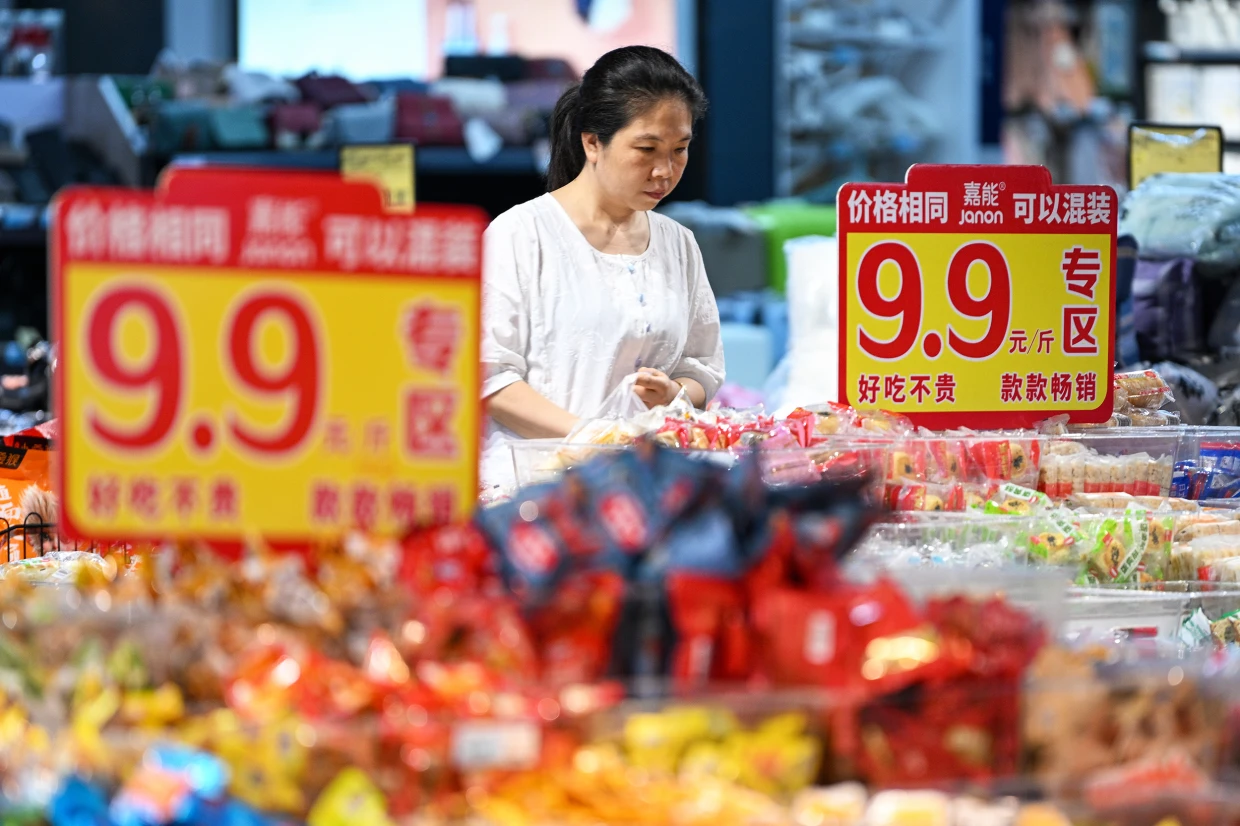
ChinaâÂÂs retail sales growth slowed sharply last month, recording its weakest performance in nearly three years, official data released on Monday showed, underscoring the mounting challenges facing Beijing as it struggles to revive domestic consumption in the worldâÂÂs second-largest economy.
The slowdown comes as Chinese leaders intensify efforts to restore confidence in an economy battered by a prolonged debt crisis in the sprawling property sector, long regarded as a cornerstone of household wealth and investment. Reviving consumer spending has become a central policy priority, even as exports continue to surge and prop up overall growth.
According to the National Bureau of Statistics (NBS), retail sales rose by just 1.3 per cent year-on-year in November, the slowest pace since December 2022, when China abandoned its strict zero-COVID policies. The figure fell well below expectations, missing a Bloomberg forecast of 2.9 per cent and marking a sharp deceleration from the same rate recorded in October.
Analysts said the data pointed to broad weakness across the domestic economy. Zichun Huang of Capital Economics noted that while policy support could lead to a partial recovery in coming months, it is unlikely to prevent overall growth from remaining subdued through 2026.
Despite faltering consumer demand, ChinaâÂÂs economy has continued to benefit from strong export performance. Shipments overseas have remained resilient even amid an intensifying trade war with the United States, helping the manufacturing sector maintain momentum and pushing the countryâÂÂs trade surplus to a record level of more than $1 trillion this year.
However, MondayâÂÂs data also revealed signs of softening on the production side. Industrial output growth slowed to 4.8 per cent year-on-year in November, its weakest reading in more than a year. The figure narrowly missed a Bloomberg forecast of five per cent and eased slightly from OctoberâÂÂs 4.9 per cent.
Huang said that while external demand for Chinese goods appears to be improving, persistent weakness in domestic demand is offsetting those gains, limiting the economyâÂÂs overall momentum.
Additional pressure was evident in investment data, with fixed-asset investment down 2.6 per cent through the end of November compared with the same period in 2024, according to the NBS. The contraction highlights ongoing caution among businesses amid uncertainty in the property market and broader economic outlook.
Chinese leaders last week convened a key annual economic meeting, pledging to boost consumption, stabilise the property sector, and expand employment opportunities. While the closed-door discussions typically set the strategic tone for the year ahead, they rarely result in immediate policy announcements.
Economists have long urged Beijing to rebalance its growth model toward domestic consumption, moving away from its traditional reliance on exports and heavy industry. The latest data suggest that consumers remain cautious, with falling property prices further eroding confidence.
The NBS reported that new home prices declined year-on-year in 64 of the 70 major cities surveyed last month, reinforcing concerns about the property downturn. Zhiwei Zhang, president and chief economist at Pinpoint Asset Management, said the slump in fixed-asset investment and declining property values have weighed heavily on consumer sentiment.
Zhang said he expects fiscal and monetary policy to be loosened modestly in the first quarter of next year in an effort to stabilise economic momentum.
Meanwhile, ChinaâÂÂs surveyed unemployment rate stood at 5.1 per cent in November, unchanged from the previous month, offering little relief to policymakers seeking signs of a sustained recovery in household confidence and spending.
News
China Retail Sales Hit Nearly Three-Year Low as Weak Consumption Weighs on Economy
China’s retail sales growth slowed sharply last month, recording its weakest performance in nearly three years, official data released on Monday showed, underscoring the mounting challenges facing Beijing as it...